
Many people spend their lives working hard, earning income, paying bills, and meeting responsibilities, yet they never fully understand what wealth building actually means.
They often assume that wealth building simply means making more money. But earning money and building wealth are not the same thing.
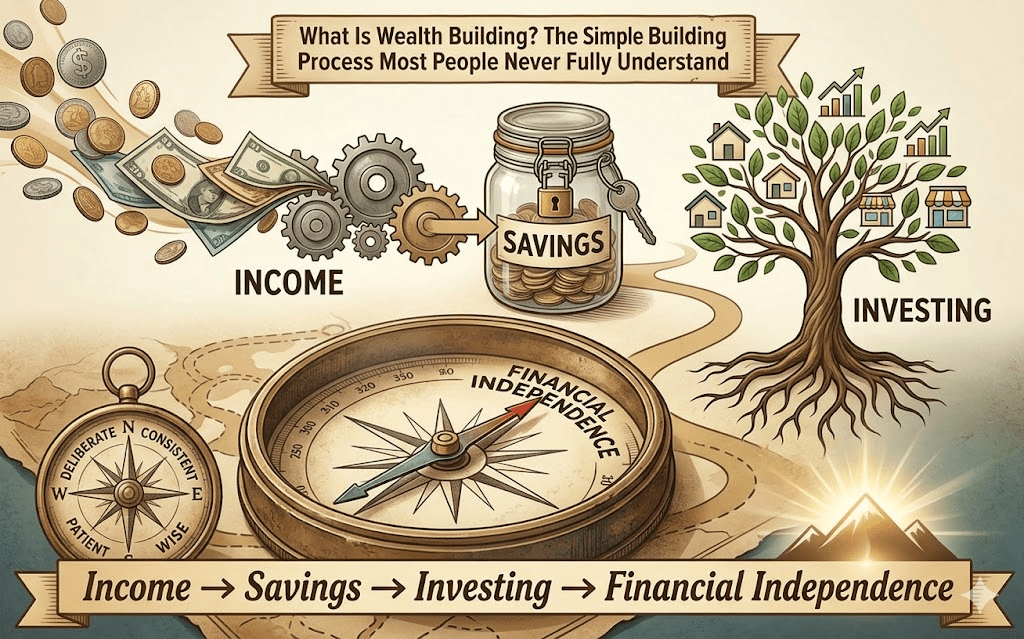
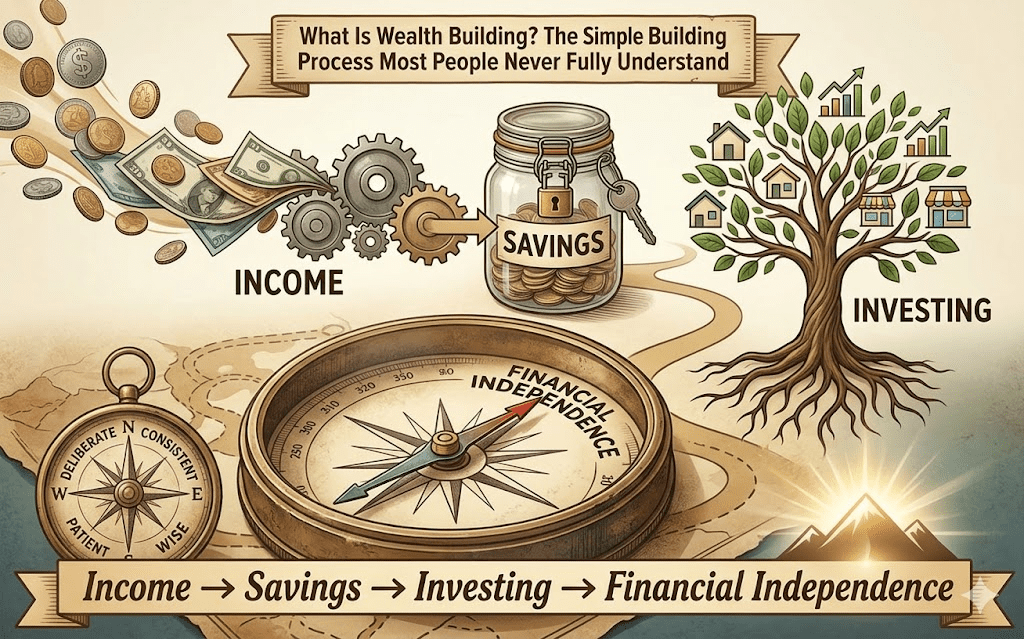
Wealth building is the disciplined process of using your income to accumulate assets that eventually produce enough income to replace your work income.
The real reason to work is not merely to support your present life. The real reason to work is to use your income to accumulate enough assets that can eventually replace your work income in retirement.
That is the true goal of wealth building: financial independence.
Why Building Wealth Matters for Financial Independence
One day every person will stop working—whether because of age, health, or personal choice—but life will still require income.
Housing will still cost money. Food will still cost money. Healthcare, transportation, and daily living expenses will continue.
That is why wealth building matters so deeply. During working years, income must do more than simply support current living. It must also help build future strength.
A paycheck by itself does not create freedom.
A paycheck only creates opportunity.
What matters is what happens to that income after it is earned.
The Three Essential Steps in Wealth Building: Income, Savings, and Investing
Every serious wealth building plan rests on three essential steps:
1. Income: The Starting Point of Wealth Building
Before wealth can grow, money must first flow toward you.
Income comes through work, skill, business ownership, service, entrepreneurship, or value creation in the marketplace.
The marketplace rewards people who solve problems and create useful value.
That is why income is always the first leg of wealth building.
2. Savings: The Foundation of Wealth Building
Income alone does not create wealth.
A portion of income must be separated and preserved instead of consumed.
This is where many people struggle. They earn enough to begin building wealth, but too little remains because income is immediately absorbed by spending, lifestyle expansion, and daily wants.
Savings is where wealth begins taking visible form.
3. Investing: The Growth Engine of Wealth Building
Saved money must eventually be placed into assets that grow.
Those assets may include:
- stocks
- real estate
- businesses
- other productive investments
Investing allows money to multiply and eventually produce future income independent of labor.
Income→Savings→Investing→Financial Independence
Without income, wealth cannot begin.
Without savings, wealth cannot accumulate.
Without investing, wealth cannot multiply.
My First Income Multiplication Lesson Began at Age Twelve
My father, who came from sharecropper roots in Alabama, taught me these principles before I understood the language of finance.
At age twelve he made me get my first job at a plant nursery earning $1.65 an hour.
Then he required that I save half of every paycheck.
At that age I did not fully understand what he was teaching me, but he was laying the first foundation of wealth building:
Income must create savings, and savings must eventually create wealth.
That early discipline stayed with me through adulthood.
Later in life, as my income grew, I continued applying the same principle:
- save aggressively
- build side income
- accumulate capital
- invest carefully
That is how wealth began growing.
Why Creating Wealth Follows Simple Financial Laws
Many people search for complicated financial formulas, but wealth usually follows simple laws repeated consistently over long periods of time.
The principles remain basic:
- earn wisely
- save deliberately
- invest patiently
The challenge is rarely understanding the formula.
The challenge is having the discipline to obey it long enough for results to appear.
That truth stands behind The 12 Laws of Wealth Building:
wealth is not random—it follows laws, and those laws can be learned.
“I go into much greater detail on these principles in my book, The 12 Laws of Wealth Building.”
⚖️ Educational content only. Not personal financial, tax, or investment advice.